
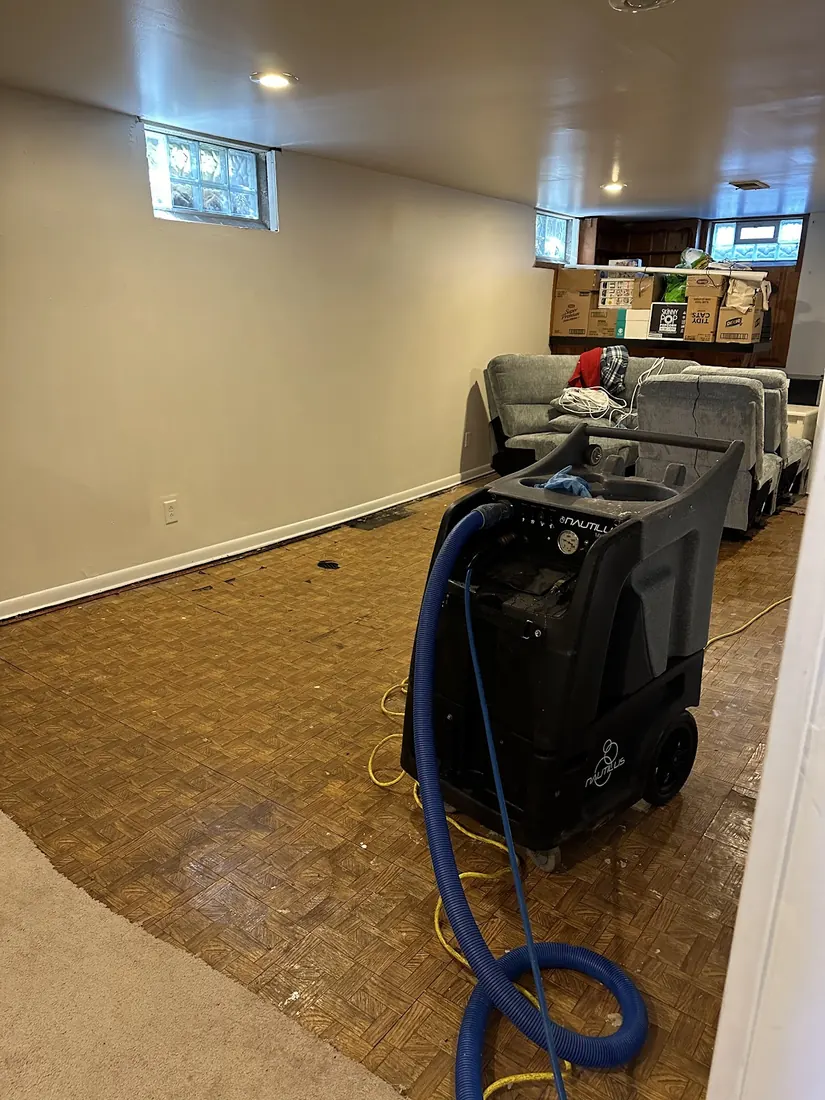
There is no single price for flooded basement cleanup, because the cost tracks the damage, not a flat rate. Published consumer research gives a sense of the range, Angi's 2026 guide reports a national average around $4,000 with many projects between roughly $2,000 and $7,000, but those are third-party benchmarks, and an individual job can land well outside them. What actually determines a number is a short list of factors, and understanding them is how you read and compare written estimates.
Why cleanup cost varies so much
Two flooded basements of the same size can cost very differently to restore. A clean-water leak caught in hours behaves nothing like a foot of sewage that sat for two days. The honest way to think about cost is as the sum of what the water category, the affected materials and the required drying and rebuild add up to.
- Water source and contamination, contaminated water needs more removal, containment and decontamination.
- Affected area and water depth, more area and deeper water mean more labor and equipment.
- How long materials stayed wet, longer exposure means more saturation and more removal.
- Finished vs unfinished basement, drywall, flooring, insulation and built-ins expand the scope.
- Hidden moisture, wall cavities and subfloors can need assessment and extended drying.
- Material removal and disposal, unsalvageable materials add removal, hauling and replacement.
- Drying equipment and monitoring, days of equipment and verification add to the total.
- Reconstruction, rebuilding is usually priced separately from the emergency mitigation.
Mitigation and reconstruction are two different numbers
A frequent surprise is that the emergency work and the rebuild are usually separate line items, and sometimes separate companies. Mitigation (extraction, material removal, cleaning, drying) stabilizes the basement; reconstruction puts it back together. Treating them as one number is where confusion starts.
This also explains why an estimate can change midway: mitigation often uncovers damage that wasn't visible at first, such as wet framing behind a wall or a compromised subfloor under flooring.
What a written estimate should include
Rather than a single headline figure, a useful estimate itemizes the work so you can compare proposals and understand what you're paying for. Homeowner disputes in restoration almost always trace back to vague scopes and undocumented equipment charges.
- A clear scope of work describing what will be removed, cleaned, dried and rebuilt.
- Extraction and any required material removal, listed separately.
- Drying equipment, how long it stays, and monitoring.
- Cleaning and sanitization of salvageable surfaces.
- Reconstruction as a distinct phase, if included.
- How changes (hidden damage, added materials) will be documented.
Cost and insurance
Whether any of this is covered depends on the water source, not the size of the bill. Sudden interior failures, sewer backups with the right endorsement, and outside flooding are all treated differently, which is covered in the insurance coverage guide. Documenting the damage early and getting an itemized scope are what make a claim and a cost review possible.
What a written estimate should itemize
A single headline number is hard to compare. A useful estimate breaks the work into lines you can check.
| Line item | What it covers |
|---|---|
| Water extraction | Pumping and removing standing water |
| Material removal | Flood cuts, tear-out of unsalvageable drywall, insulation and flooring |
| Drying equipment and monitoring | Air movers, dehumidifiers and daily moisture readings |
| Cleaning and sanitizing | Antimicrobial treatment of salvageable surfaces |
| Reconstruction (often separate) | Rebuilding drywall, flooring, trim and paint |
A flooded basement doesn't wait. For emergency water extraction, drying or cleanup help, call (877) 927-8127, a 24/7 line, anywhere in the United States.