
Basement Flood Water Removal & Extraction
Rapid removal of standing basement water with pumps and extractors, the first step before drying.
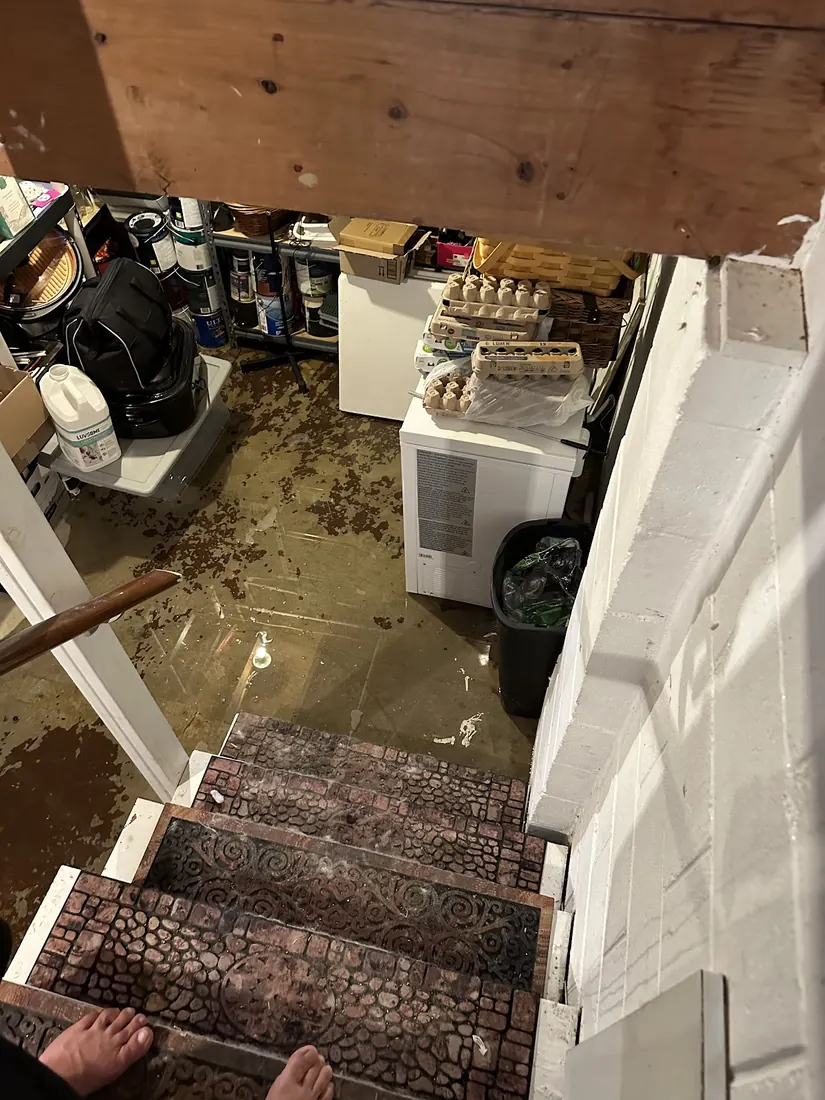
Flood water removal is the first physical step of flooded basement cleanup: getting standing water out of the basement so the structure can be assessed and dried. It is not the same as drying. Pumps and extractors remove the water you can see, but moisture stays behind inside drywall, insulation, framing and the slab, which is why extraction is followed by moisture detection and structural drying.
Flood Water Removal at a glance
- Safety and electrical check
- Water category assessment
- Pump and extractor setup
- Standing water removal
- Residual moisture mapping
When flood water removal is needed
Standing water should be removed as early as it is safe to do so. The U.S. EPA advises drying flood-affected areas within 24 to 48 hours where possible to limit mold growth, and water that sits longer migrates deeper into porous materials.
The right method depends on how much water is present and where it came from. A shallow, clean-water spill of a few gallons behaves very differently from a foot of storm water across a finished basement.
- A few gallons from a clean supply line, caught quickly, may only need a wet/dry vacuum and air movement.
- Several inches to a foot or more of water usually calls for submersible pumps and truck-mounted or portable extractors.
- Water from a sewer backup, storm or unknown source is treated as contaminated and handled with the precautions covered on the sewage backup cleanup page.
Safety has to come before extraction
The CDC warns never to touch electrical equipment while standing in or near water. Power to the affected area should be shut off only when it is safe to reach the panel without stepping into water; otherwise a qualified electrician handles it.
Deep basements add a second hazard. When the soil outside is saturated, pumping the water out too quickly removes the pressure that was holding the foundation walls in place, and the imbalance can crack or collapse them. A deeply flooded basement should be pumped down gradually, and a professional assessment is the safer path when water is more than a couple of feet deep.
Equipment used to remove basement flood water
Different tools match different volumes and surfaces.
- Submersible pumps move large volumes of standing water out of a deep basement.
- Truck-mounted and portable extractors pull water from the surface and from carpet before it wicks further.
- Extraction wands and weighted (ride-on) extraction press water out of carpet and pad assemblies.
- Wet/dry vacuums handle small residual volumes and tight corners.
What happens after the standing water is gone
Removing visible water does not mean the basement is dry. Water left in the slab, behind baseboards and inside wall cavities is what causes odor, warping and mold weeks later. After extraction, a moisture inspection maps where water has traveled, drying equipment is set, and wet materials that cannot be saved are identified for removal.
This is the natural hand-off to structural drying and dehumidification, and, where carpet or flooring is involved, to carpet and padding restoration and flooring and subfloor restoration.
Matching the removal method to the water
The right extraction approach depends on how much water is present and where it came from. This is the general picture; a crew confirms it on site.
| Situation | Typical approach |
|---|---|
| Small clean-water spill, under about 10 sq ft, caught within hours | Wet/dry vacuum plus strong air movement |
| Several inches up to about a foot of water | Submersible pump and truck-mounted or portable extractor |
| Deep water, more than roughly two feet | Gradual pump-down after a professional assessment, to protect the foundation |
| Any sewage, storm or unknown-source water | Treated as contaminated; see sewage backup cleanup |
Dealing with this now? Reach a flood cleanup specialist on the 24/7 line at (877) 927-8127, anywhere in the United States.
Safety and technical points on this page follow guidance from the EPA, CDC and the IICRC S500 water damage restoration standard. See editorial and sources.
Related cleanup services
Flood Water Removal: frequently asked questions
Is a wet/dry vacuum enough to remove basement flood water?
For a small, clean-water spill caught within hours, a wet/dry vacuum plus strong air movement can be enough. For several inches or more, water from an unknown or contaminated source, or water that has had time to soak into materials, extraction equipment and professional drying are the safer choice because surface removal alone leaves moisture behind.
Why shouldn't I pump out a deep flooded basement all at once?
When the ground outside is saturated, the water inside is partly counterbalancing the pressure pushing on the foundation walls. Removing it too fast can let that outside pressure crack or collapse the walls. Deep flooding should be pumped down gradually, ideally after a professional assessment.
How fast should standing water be removed?
As soon as it is safe. The EPA points to a 24-48 hour window for drying flood-affected areas to reduce mold risk, so prompt extraction followed by drying matters more than any single tool.
Does flood water removal dry the basement?
No. Extraction removes liquid water. Moisture remains inside drywall, insulation, wood framing and concrete, which is why moisture detection and structural drying follow extraction.
How do you get water out of a basement fast?
Safely first, then with the right tool for the volume. A small clean spill can be handled with a wet/dry vacuum and air movement; several inches or more needs a submersible pump and extractor. Deep water is pumped down gradually, not all at once, because the saturated soil outside can crack the foundation if the water is removed too quickly.
Can I use a shop vac or pool pump for a flooded basement?
A wet/dry (shop) vacuum works for a small, clean-water spill caught quickly. A pool or utility pump can move deeper water, but deep flooding should be pumped down gradually and, if the source is contaminated or unknown, handled with the right protection. Surface removal alone does not dry the materials underneath.
Need flood water removal help? Reach a specialist on the 24/7 line.
24/7 emergency line · water extraction, drying, sanitization and reconstruction help nationwide