
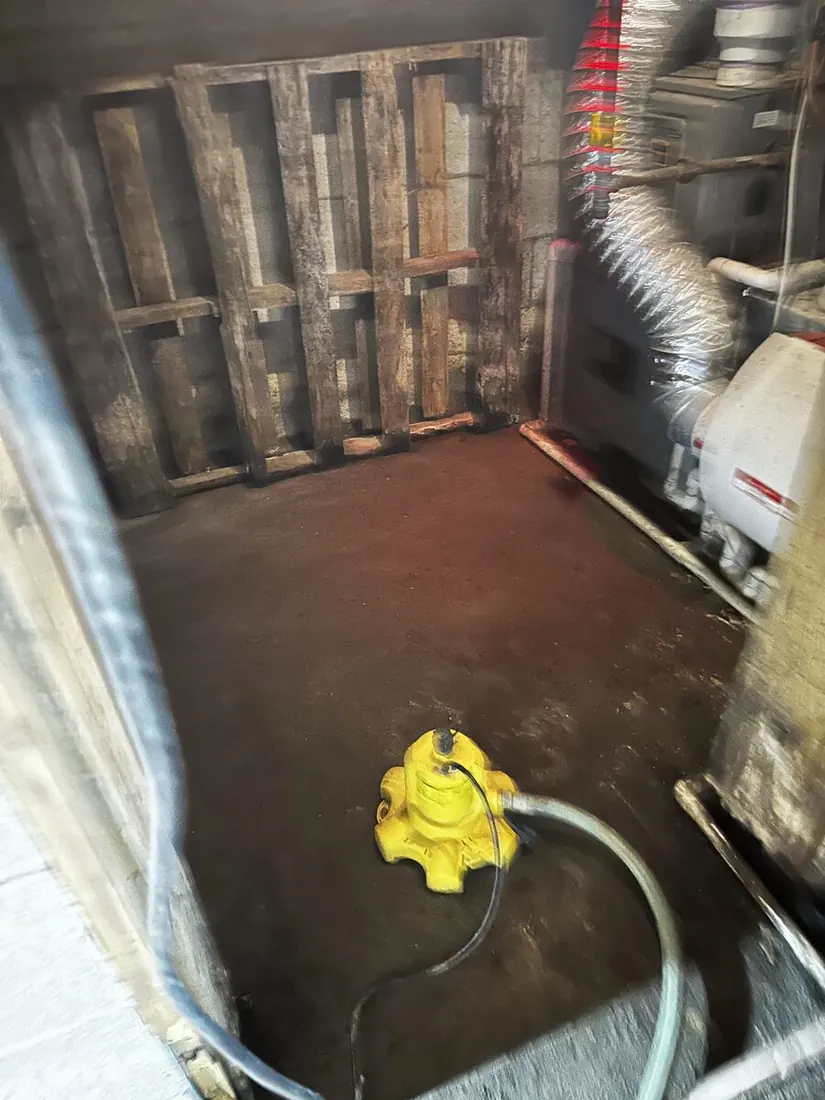
When a basement floods, the first hour is about safety and limiting damage, not heroics. The order that matters most is: protect people first, stop or slow the water if you can do it safely, document the damage, then get the water out and the structure dried. This guide walks the first steps in that order and flags the moments to stop and call for help on a 24/7 line.
1. Stay out of the water until it's safe
The most serious risk in a flooded basement is electricity, not the water itself. The CDC warns never to touch electrical equipment while standing in or near water. If the basement has standing water and you cannot reach the breaker panel without stepping into it, stay out and have the power shut off at the meter by the utility or a qualified electrician.
Do not assume the water is clean. Water from a storm, a sewer line, or an unknown source can carry contaminants, so keep children and pets away from it entirely.
2. Stop or slow the water, if you can do it safely
If the flooding is coming from a plumbing source you can reach safely, shutting off the water supply stops it at the source. If it is coming from outside during a storm, you usually cannot stop it, and the focus shifts to safety and limiting spread rather than fighting the flow.
Resist the urge to immediately pump out a deeply flooded basement. When the ground outside is saturated, pumping too fast can crack or collapse foundation walls, so deep flooding is pumped down gradually, ideally after a professional assessment.
3. Protect belongings and document everything
Move what you safely can to a dry level, and photograph the damage before you start cleaning. The EPA and insurers both recommend documenting flood damage with photos before cleanup, because those images support an insurance claim later.
Capture the water line on walls, affected belongings, and the source if it is visible. This record matters whether or not the loss turns out to be covered, and coverage depends heavily on the water source, as the insurance coverage guide explains.
4. Don't run the furnace or HVAC if it got wet
If flood water reached your furnace, blower or ductwork, don't switch the system on to 'dry things out.' The EPA advises assessing a flood-affected HVAC system before operating it, because wet electrical and gas components are a hazard and a contaminated system can push mold through the house. This is handled under HVAC and duct flood cleanup.
5. Get the water out, then get it dry
Once it is safe, the cleanup sequence is extraction, then drying, then cleaning and restoration. Removing the standing water is only the start, the EPA points to a 24-48 hour window for drying flood-affected areas to limit mold, and moisture hides in drywall, flooring and framing after the visible water is gone.
That is the hand-off to flood water removal, structural drying and, where materials are ruined, material removal. For a quick read on whether to handle it yourself, see DIY vs professional cleanup.
The first hour, in order
If you do nothing else, do these in this order. Safety comes before saving anything.
| Order | Action | Why |
|---|---|---|
| 1 | Keep everyone out of standing water that may be energized | Electrocution is the top risk; the CDC warns against touching electrical equipment in or near water |
| 2 | Cut power to the area only if you can reach the panel safely | Otherwise have the utility or an electrician do it |
| 3 | Stop the source if it is a reachable plumbing shut-off | Stops an indoor leak at the source |
| 4 | Photograph the damage and the water line | Supports an insurance claim later |
| 5 | Call a 24/7 flood cleanup line | Extraction and drying should start within the EPA's 24 to 48 hour window |
A flooded basement doesn't wait. For emergency water extraction, drying or cleanup help, call (877) 927-8127, a 24/7 line, anywhere in the United States.