
Basement Water-Damaged Material Removal
Controlled removal of unsalvageable drywall, insulation and subfloor, including the flood cut above the water line.
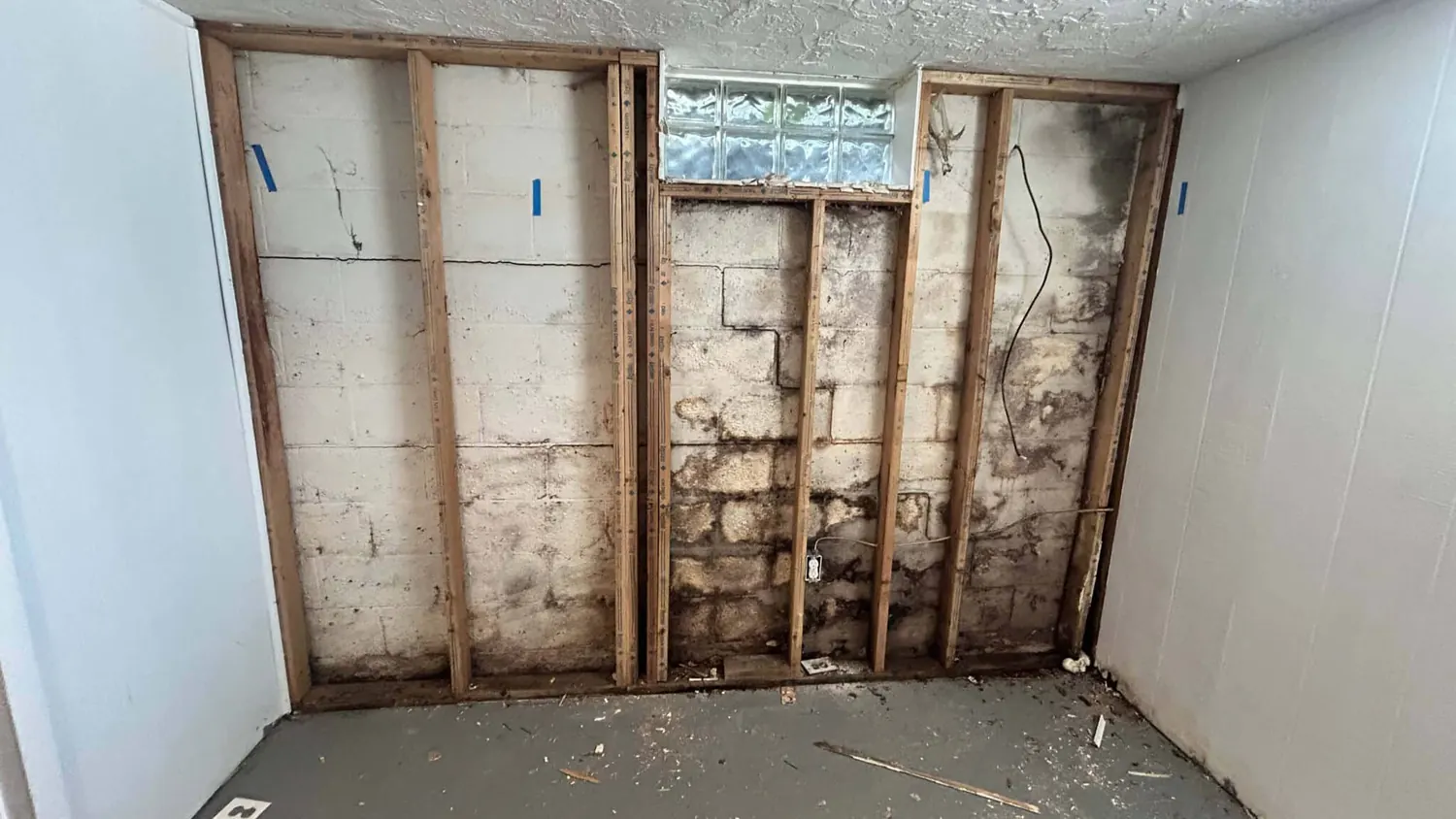
Water-damaged material removal is the controlled demolition of attached building materials that a flood has made unsalvageable, wet drywall, saturated insulation, and damaged subfloor. The goal is to remove exactly what cannot be dried or decontaminated, no more, so the structure can dry and be rebuilt. Homeowners most often ask why the drywall is being cut and how far up.
Water-Damaged Material Removal at a glance
- Assess materials against water category
- Contain the work area
- Flood cut and selective removal
- Expose cavities for drying
- Dispose and document
Why some materials come out instead of drying
Porous materials that absorbed contaminated water, or that stay wet long enough to break down, generally cannot be restored in place. Saturated fiberglass insulation loses its function and holds water; drywall that wicked contaminated water or began to crumble is removed; particleboard and some subfloors swell and delaminate.
The decision is driven by the water category and the material, not by appearance alone. Clean water caught early saves more material; contaminated water removes more. This connects directly to cleanup and sanitization and, for the worst cases, sewage backup cleanup.
The flood cut and selective demolition
When drywall is removed, it is often cut in a straight line above the water line, commonly a foot or so above the highest point water reached, so the wet lower section and the insulation behind it come out while the dry upper wall stays. This is called a flood cut, and it lets the wall cavity dry and makes clean reconstruction possible.
The aim is selective removal: take out what is wet or contaminated, expose the cavity so structural drying can reach it, and leave sound material in place. Over-removal adds cost and rebuild; under-removal traps moisture.
What comes next
Once unsalvageable material is out and the cavity is exposed, the space is dried and verified, then rebuilt under flood damage reconstruction. Homeowners weighing DIY demolition against hiring out should factor in contamination, dust control and disposal, the what to remove after a basement flood guide walks through the decisions.
Remove, or dry in place?
The call comes down to the material, the water category and how long it stayed wet, confirmed with moisture readings.
| Material | Typical outcome |
|---|---|
| Drywall, clean water, brief exposure, verified dry | Can stay |
| Drywall, contaminated or stayed wet | Flood cut and remove |
| Fiberglass insulation, saturated | Remove |
| Particleboard or MDF trim | Usually remove |
| Solid wood framing, sound and clean | Dry in place |
Dealing with this now? Reach a flood cleanup specialist on the 24/7 line at (877) 927-8127, anywhere in the United States.
Safety and technical points on this page follow guidance from the EPA, CDC and the IICRC S500 water damage restoration standard. See editorial and sources.
Related cleanup services
Water-Damaged Material Removal: frequently asked questions
Why is the contractor cutting my drywall after a flood?
Wet drywall and the insulation behind it hold water and, if contaminated, cannot be disinfected in place. Cutting the wall above the water line (a flood cut) removes the wet, unsalvageable section, lets the wall cavity dry, and allows clean reconstruction.
How high is drywall usually cut after flooding?
Commonly about a foot above the highest point the water reached, so the full wet zone and the insulation behind it are removed. The exact height depends on how far moisture wicked up, which is confirmed with moisture readings.
Can wet drywall ever be saved?
Sometimes, if it was clean water, the exposure was brief, and readings confirm it dried fully. Drywall that absorbed contaminated water, stayed wet, or started to soften is removed rather than dried.
Is removing water-damaged materials something I can do myself?
Clean-water, small-area demolition can be a DIY task with proper dust control and disposal. Contaminated water, large areas, or uncertainty about what is behind the wall (wiring, mold, asbestos in older homes) are reasons to bring in a professional.
How high up is drywall removed after flooding?
Commonly about a foot above the highest point the water reached, so the full wet zone and the insulation behind it come out while the dry upper wall stays. The exact height depends on how far moisture wicked up, which is confirmed with a moisture meter.
What does water-damaged drywall removal cost?
It depends on how much is removed, the water category, disposal, and whether insulation and other materials come out with it. There is no flat rate; a written scope that lists what is being removed is the meaningful number. See the [[blog:flooded-basement-cleanup-cost|cost guide]].
Need water-damaged material removal help? Reach a specialist on the 24/7 line.
24/7 emergency line · water extraction, drying, sanitization and reconstruction help nationwide