
Basement Flooring & Subfloor Restoration
Addressing water trapped under vinyl plank, laminate, tile and subfloor, dry in place, lift, or replace.
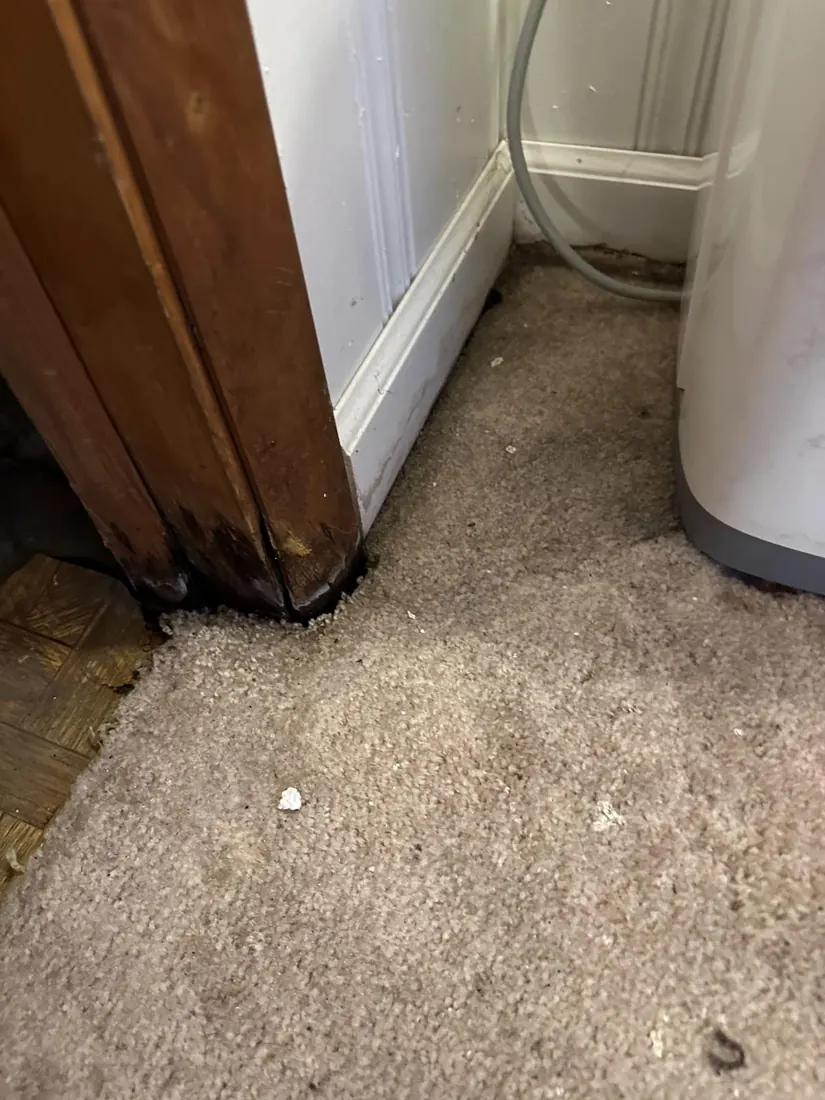
Flooring and subfloor restoration addresses water damage to basement floor assemblies, vinyl plank, laminate, tile and the subfloor beneath them. The central question is almost always the same: is water trapped under the floor, and does the floor have to come up to dry it? A water-resistant surface does not answer that question.
Flooring & Subfloor Restoration at a glance
- Moisture-read the assembly
- Decide dry-in-place, lift or replace
- Dry the subfloor or slab
- Verify against a dry standard
- Relay or replace flooring
A water-resistant surface is not a dry floor
Vinyl plank and many laminates resist water on top, but water migrates through seams and around the edges of the room and then sits on the subfloor beneath, where the surface traps it. The floor can look and feel dry while the assembly underneath stays wet.
That is why this service starts with moisture detection. Readings through or around the floor determine whether the assembly can be dried in place or whether sections have to be lifted so the subfloor can dry and be verified.
How different floor assemblies behave
The material changes the decision.
- Luxury vinyl plank (LVP): water-resistant surface can trap water beneath; planks may need lifting to dry the subfloor.
- Laminate: swells and delaminates once water reaches the core; often not salvageable after real saturation.
- Tile over concrete: tile may survive, but moisture can remain in the slab and grout and needs verifying.
- OSB/plywood subfloor: can sometimes be dried if caught early and structurally sound; swollen or delaminated subfloor is replaced.
- Concrete slab: holds moisture after the surface looks dry and is checked before new flooring goes down.
Dry in place, lift, or replace
The outcome falls into three buckets: dry the assembly in place when readings allow, lift sections to dry the subfloor and relay the floor, or remove and replace when the material is too damaged. Getting this right prevents the common problem of new flooring laid over a subfloor that was never actually dry.
If the subfloor or framing is compromised, the work continues into reconstruction. The water under basement flooring guide covers how homeowners can tell whether to be worried.
Floor type and the usual decision
A water-resistant surface is not proof the assembly underneath is dry, so the decision depends on the material and the subfloor reading.
| Floor type | How it behaves | Usual decision |
|---|---|---|
| Vinyl plank (LVP) | Traps water beneath the surface | Often lifted to dry the subfloor, then relaid |
| Laminate | Core swells and delaminates | Usually removed |
| Tile over concrete | Tile may survive | Check the slab for retained moisture |
| OSB or plywood subfloor | Dries if caught early and sound | Replaced if swollen or delaminated |
| Concrete slab | Holds moisture after it looks dry | Dry and verify before new flooring |
Dealing with this now? Reach a flood cleanup specialist on the 24/7 line at (877) 927-8127, anywhere in the United States.
Safety and technical points on this page follow guidance from the EPA, CDC and the IICRC S500 water damage restoration standard. See editorial and sources.
Related cleanup services
Flooring & Subfloor Restoration: frequently asked questions
Can water get trapped under vinyl plank flooring?
Yes. LVP resists water on the surface but water enters through seams and room edges and sits on the subfloor beneath, where the plank traps it. The surface can feel dry while the assembly underneath stays wet, so it is checked with meters.
Does the whole floor have to be removed after a basement flood?
Not always. If moisture readings allow, parts of an assembly can be dried in place. Often, sections are lifted to dry the subfloor and then relaid. Full removal is for materials too swollen, delaminated or contaminated to save.
Can laminate flooring survive a flood?
Usually not once water reaches the fiberboard core, which swells and delaminates. Laminate exposed to real saturation is typically removed, unlike some tile or properly dried subfloor.
Is a concrete basement floor fine once it looks dry?
Not necessarily. Concrete holds moisture well after the surface appears dry. It is checked with appropriate meters before new flooring is installed, because sealing moisture under new flooring causes problems later.
Can water be trapped under vinyl plank flooring?
Yes. LVP resists water on the surface but water enters through seams and room edges and sits on the subfloor beneath, where the plank keeps it from evaporating. The surface can feel dry while the assembly underneath stays wet, so it is checked with meters.
Should I replace my basement subfloor after flooding?
Only if the readings or its condition call for it. An OSB or plywood subfloor caught early and still structurally sound can often be dried; one that swelled or delaminated is replaced. Laying new flooring over a subfloor that was never verified dry is what causes problems later.
Need flooring & subfloor restoration help? Reach a specialist on the 24/7 line.
24/7 emergency line · water extraction, drying, sanitization and reconstruction help nationwide