After a flood you're hiring under pressure, which is exactly when bad decisions get made. The companies worth hiring have a few things in common, they document moisture, they put the scope in writing, and they can explain what they're doing and why. This guide gives the questions to ask and the red flags to walk away from, so you can judge a company on substance rather than on who answers the phone fastest.
The questions that actually matter
Most of what separates a solid restoration company from a risky one comes down to documentation and standards. These questions surface it quickly.
- Will you take moisture readings and give me a drying log? Verified drying is the core of the job.
- Will I get a written scope of work before anything is removed?
- What standard do you work to? IICRC S500 is the recognized water-damage restoration standard.
- How do you decide what to remove versus dry? There should be a clear, material-based answer.
- How are changes handled if you find hidden damage?
- How does the drying equipment charge work, and how long does it stay?
Why moisture documentation is the dividing line
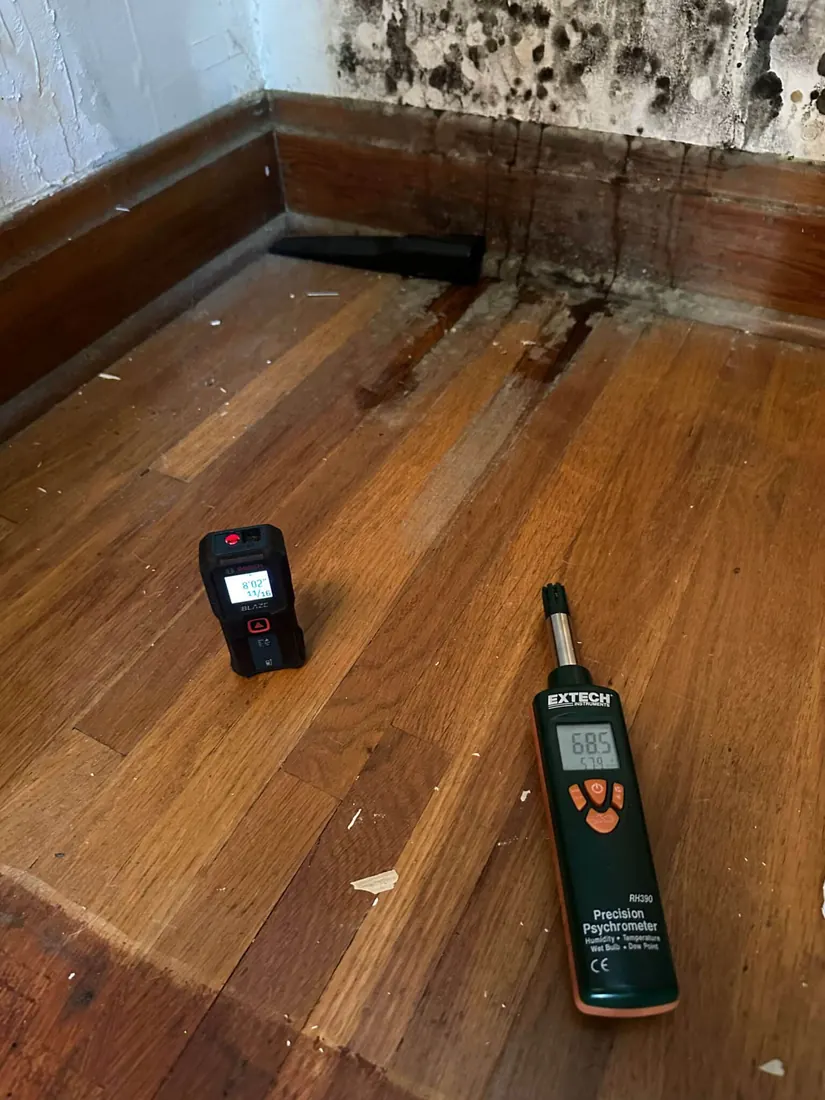
The clearest signal of a professional is whether they measure and document drying. A company that sets fans and leaves without readings has no way to prove the basement is dry, and you have no way to dispute a charge or confirm completion. Documented moisture readings against a dry standard are what structural drying is built on, and they're what protect you later.
Disputes in restoration almost always trace back to missing documentation: unexplained equipment-day charges, work that didn't match the loss, and no record of what was actually dried.
Red flags
A few patterns reliably signal trouble.
- No written scope, or pressure to sign a broad authorization on the spot.
- No moisture readings or drying documentation offered.
- Vague answers about what's being removed and why.
- Reluctance to explain equipment charges or how long equipment stays.
- Promises that sound too clean for an unpredictable loss.
Mitigation and reconstruction
Finally, clarify whether the company does mitigation only, reconstruction only, or both, and get each in writing. The two phases are usually separate, as the cost guide explains, and knowing who owns the rebuild avoids a gap after the drying equipment leaves.
Green flags vs red flags
Most of what separates a solid company from a risky one is documentation and transparency.
| Green flag | Red flag |
|---|---|
| Takes moisture readings and gives a drying log | Sets fans and leaves, no readings |
| Written scope before anything is removed | Pressure to sign a broad authorization on the spot |
| Works to IICRC S500 and can explain it | Vague about standards or methods |
| Clear on equipment charges and how long they stay | Won't explain charges |
| Explains what is removed and why | Removes materials without explanation |
A flooded basement doesn't wait. For emergency water extraction, drying or cleanup help, call (877) 927-8127, a 24/7 line, anywhere in the United States.