
Basement Flood Cleanup & Sanitization
Cleaning and decontamination of basement surfaces and salvageable materials after the water is out.
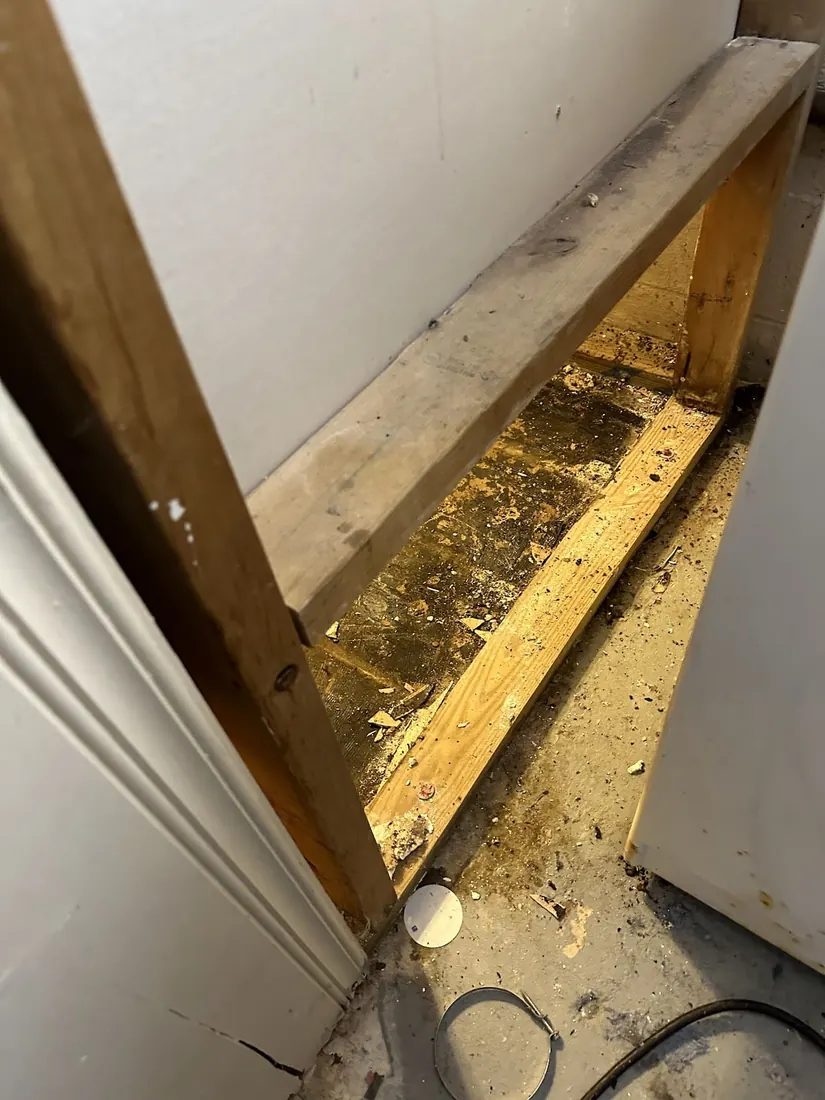
Flood cleanup and sanitization is the stage where basement surfaces and salvageable materials are cleaned, and contamination is addressed, after the water is out. It covers what can be cleaned in place, what has to be removed first, and why disinfectant alone does not solve a contaminated flood. The right approach depends heavily on the water source, which is why it connects closely to sewage backup cleanup.
Flood Cleanup & Sanitization at a glance
- Contamination assessment
- Remove unsalvageable porous material
- Clean and HEPA-vacuum surfaces
- Apply appropriate antimicrobial
- Dry and verify
Cleaning depends on the water category
The IICRC S500 standard groups water into three categories, and the category changes what can be cleaned versus what must be discarded.
Sanitizing a surface does not undo contamination that has soaked into a porous material. A hard, non-porous surface like sealed concrete or tile can often be cleaned and disinfected. A porous material that absorbed contaminated water, such as drywall, carpet pad or fiberglass insulation, usually has to be removed rather than sprayed.
- Category 1 (clean water, e.g. a supply line): many materials can be cleaned and dried if addressed quickly.
- Category 2 (gray water, some contamination): cleaning with more caution and more removal of porous materials.
- Category 3 (black water, e.g. sewage or flood water): heavy contamination; porous materials that contacted it are generally removed and the area is decontaminated.
Order of operations matters
Cleaning before unsalvageable material is removed wastes effort and can spread contamination. The practical sequence is: remove unsalvageable porous material, clean and HEPA-vacuum surfaces, apply an appropriate antimicrobial to cleanable surfaces, then dry and verify.
Disinfectant choice also matters. The EPA warns against running fans where mold is already visible, because airflow can spread spores, so cleaning and containment come before aggressive air movement in a moldy area.
Limits of surface sanitization
A clean smell is not proof a basement is decontaminated or dry. If odor returns after cleaning, the cause is usually trapped moisture or a contaminated material left in place, which points to odor removal and moisture detection rather than more spraying.
Material that has to come out is handled on the water-damaged material removal page; heavily contaminated jobs follow the sewage backup cleanup process.
Can this surface be cleaned, or does it come out?
Whether a surface can be sanitized in place or has to be removed depends on whether it is porous and what water category it met.
| Surface or material | Typical decision |
|---|---|
| Sealed concrete or tile (non-porous) | Clean and disinfect in place |
| Drywall that absorbed contaminated water | Remove; disinfecting the surface does not reach the inside |
| Carpet padding | Usually removed |
| Sound, clean wood framing | Clean and dry in place |
| Any area with visible mold | Contain first; the EPA warns against running fans over visible mold |
Dealing with this now? Reach a flood cleanup specialist on the 24/7 line at (877) 927-8127, anywhere in the United States.
Safety and technical points on this page follow guidance from the EPA, CDC and the IICRC S500 water damage restoration standard. See editorial and sources.
Related cleanup services
Flood Cleanup & Sanitization: frequently asked questions
Can I just disinfect a flooded basement instead of removing materials?
Only for non-porous surfaces that were not heavily contaminated. Porous materials such as drywall, carpet padding and fiberglass insulation that absorbed gray or black water generally have to be removed; disinfecting the surface does not reach contamination inside the material.
What disinfectant is used after a basement flood?
Professionals use EPA-registered antimicrobial products matched to the surface and the water category. The more important decision is usually what to remove first, because cleaning a material that should be discarded does not make it safe.
Should I run fans to speed cleanup if I see mold?
The EPA advises against running fans over visible mold, because moving air can spread spores through the home. Visible mold should be contained and addressed before aggressive air movement in that area.
Why does my basement still smell after cleaning?
A lingering smell usually means moisture is still trapped in materials or a contaminated item was left in place, not that more disinfectant is needed. Moisture detection and targeted odor removal address the source.
What kills bacteria after a basement flood?
Professionals use EPA-registered antimicrobial products matched to the surface and the water category. The more important step is removing porous materials that absorbed contaminated water, because an antimicrobial on the surface does not decontaminate the inside of a porous material.
Is bleach enough to clean a flooded basement?
Bleach can disinfect some hard, non-porous surfaces, but it is not a complete answer. It does not restore a porous material that soaked up contaminated water, and using it in a closed basement raises fume concerns. The decision of what to remove versus clean matters more than the product used.
Need flood cleanup & sanitization help? Reach a specialist on the 24/7 line.
24/7 emergency line · water extraction, drying, sanitization and reconstruction help nationwide