
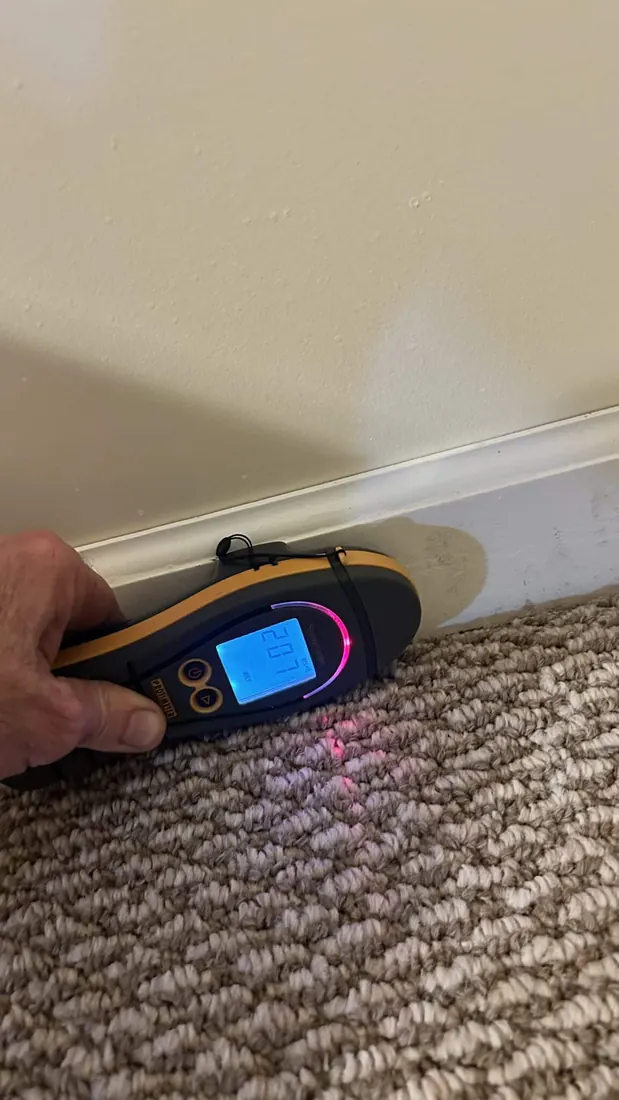
Flooded basement cleanup doesn't have a single timeline, because it's really three phases with very different clocks: water removal (hours), structural drying (days, verified by readings), and reconstruction (longer, and often separate). The honest answer to 'how long' is that drying ends when moisture readings hit a target, not on a fixed date, but here's how the phases usually stack up.
Phase 1: Water removal, hours
Extracting standing water is usually the fastest phase, often done in hours once it's safe and the equipment is on site. But removing the water is not the same as drying the basement, so this phase is the start of the clock, not the end. It hands off to water removal and then drying.
Phase 2: Structural drying, days, measured not guessed
Drying is where most of the time goes, and it's the phase people most want to rush. Many basements take several days of monitored drying, but the real answer is that drying is complete when moisture readings in the affected materials reach a target compared to a dry standard, not when a set number of days has passed.
The variables are how much water there was, how long materials stayed wet, the materials themselves, and the environment. A saturated subfloor or concrete slab holds moisture longer than drywall, which is why structural drying is tracked with daily readings rather than a calendar.
Phase 3: Reconstruction, the longer tail
If materials were removed, rebuilding them is usually the longest phase, and it's typically separate from the emergency work. Reconstruction can't start until the structure is verified dry, and its length depends on how much was removed, from patching a flood cut to re-drywalling, re-flooring and refinishing a whole basement.
This is why a 'quick' flood cleanup and a 'long' one can both be accurate: the drying may finish in days while the rebuild stretches on.
Why faster isn't always better
Rushing drying is how trapped moisture, odor and mold get sealed into a basement. The 24-48 hour window the EPA points to is about starting drying promptly to limit mold, not a promise that everything is dry by hour 48. Completion based on readings, not speed, is what prevents the problems covered in water under basement flooring.
The three phases and their clocks
Cleanup is really three phases with different timelines. Drying ends on readings, not a date.
| Phase | Typical time | Depends on |
|---|---|---|
| Water removal | Hours, once it is safe | Volume and access |
| Structural drying | Days of monitored drying | Water amount, materials, how long they were wet, the environment |
| Reconstruction | Longer, usually separate | How much was removed |
A flooded basement doesn't wait. For emergency water extraction, drying or cleanup help, call (877) 927-8127, a 24/7 line, anywhere in the United States.