
Some flooded basements are a reasonable DIY job; many are not. The deciding factors aren't about confidence or tools, they're about the water category, how deep and how long, whether the furnace or electrical got wet, and whether moisture is hiding where you can't dry it. This guide gives a clear line between the two so you can make the call quickly.
When DIY can be reasonable
A small, clean-water event, caught fast, in an unfinished space, is the case where careful DIY can make sense. Think a few gallons from a known clean source, on sealed concrete, addressed within hours.
- Clean water (Category 1) from a known source such as a supply line.
- A small area, shallow water, and only a few hours of exposure.
- Unfinished space, concrete and limited porous materials.
- No electrical equipment or HVAC in contact with the water.
When to call a professional
The situation crosses into professional territory when safety, contamination, or hidden moisture enters the picture, and those are common in basement floods.
- Any sewage or storm water, treated as contaminated (Category 2 or 3).
- Deep water, or water that sat long enough to soak materials.
- A finished basement with drywall, carpet, insulation or flooring.
- The furnace, electrical panel or ductwork got wet.
- A musty smell, or any sign moisture is trapped where you can't reach it.
The real gap: verification, not effort
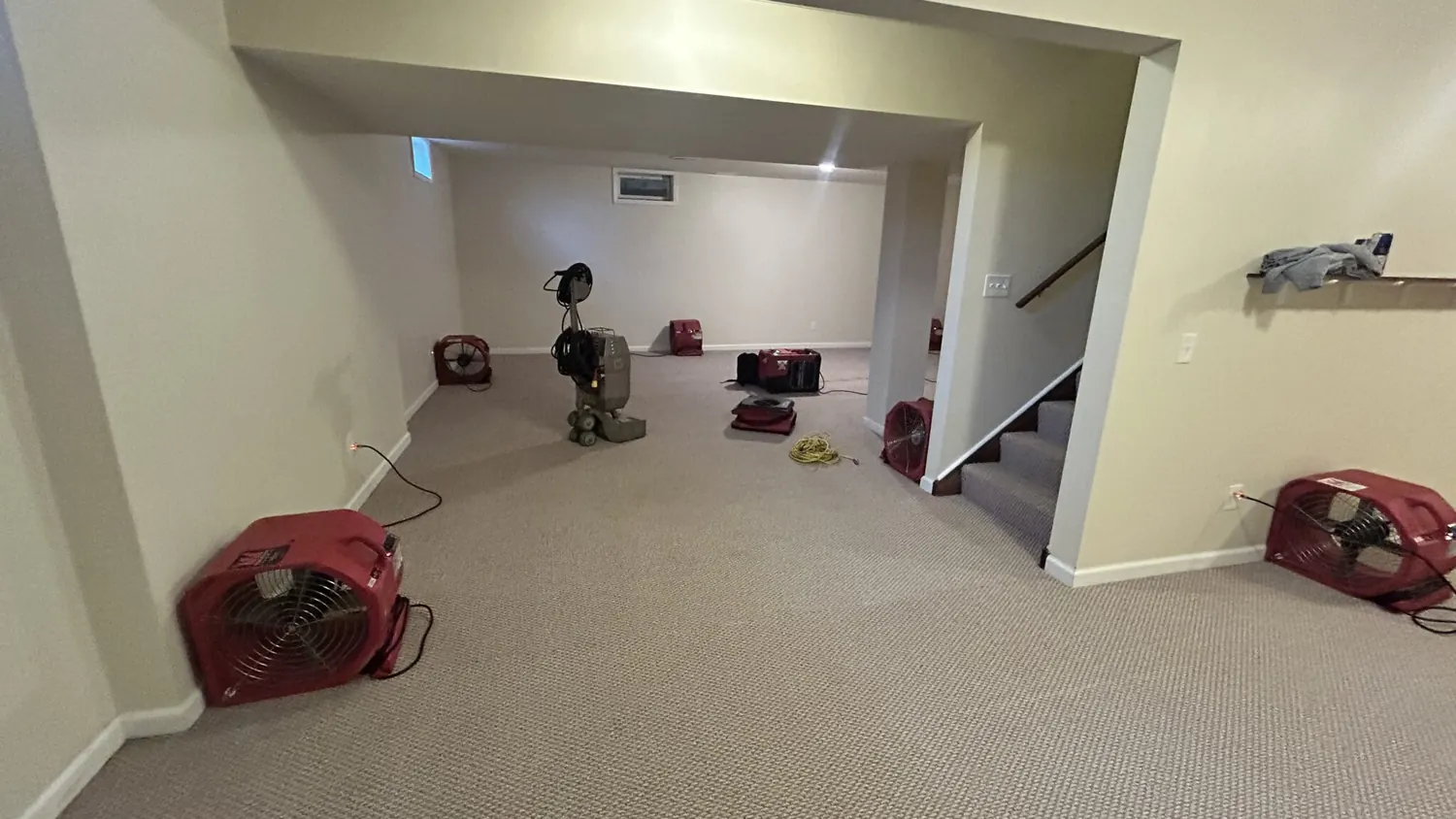
The hardest part of a flooded basement to DIY isn't removing water, it's confirming the structure is actually dry. A shop vacuum and rented fans can dry a surface, but without moisture readings there is no way to know the subfloor, wall cavity or slab underneath is dry. This is why trapped moisture turns into mold and odor weeks later, and it's the core of structural drying and moisture detection.
A homeowner comparing a professional drying quote against equipment rental is really comparing documented, verified drying against hoping the surface drying was enough. That's the trade-off to weigh, discussed further in water under basement flooring.
Safety is the hard stop
Two situations are not DIY under any circumstances: electricity in contact with water, and fuel oil floating on flood water. The CDC warns against touching electrical equipment in or near water, and health departments warn against personally removing basement flood water when fuel oil is present. In both cases, stay out and call for help.
DIY-reasonable vs call a professional
The line is not about confidence or tools. It is about the water, the materials and what you cannot verify.
| Factor | DIY can be reasonable | Call a professional |
|---|---|---|
| Water category | Clean (Category 1) | Gray or black (storm, sewage, unknown) |
| Depth and time | Shallow, caught within hours | Deep, or sat long enough to soak in |
| Space | Unfinished, sealed concrete | Finished: drywall, carpet, flooring |
| Electrical / HVAC | None in contact with water | Panel, outlets or HVAC got wet |
| Hidden moisture | None suspected | Any musty smell or trapped water you cannot reach |
A flooded basement doesn't wait. For emergency water extraction, drying or cleanup help, call (877) 927-8127, a 24/7 line, anywhere in the United States.