
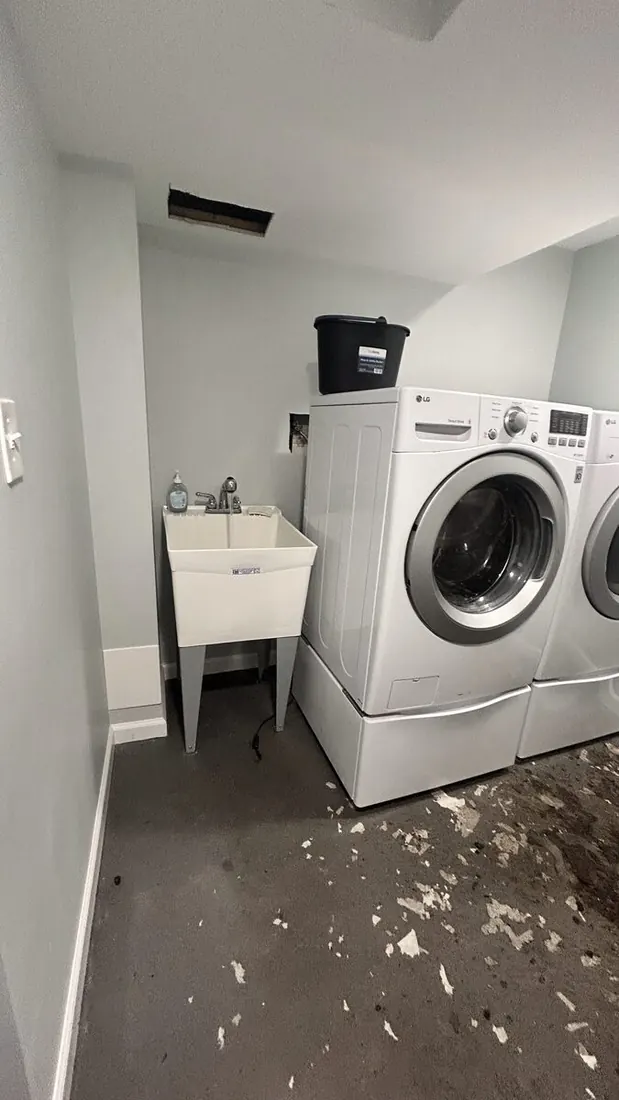
Yes, basement floodwater can be dangerous, and the danger is usually not obvious by looking. The three risks that matter most are electricity, contamination, and, in deep flooding, structural pressure on the foundation. Knowing which applies tells you whether it's safe to enter at all, which is the most important decision in the first minutes of a flood.
Electrical hazard: the first thing to rule out
Water and electricity together are the most immediate life-threatening risk in a flooded basement. The CDC warns never to touch electrical equipment while standing in or near water. If outlets, a panel, or appliances are in contact with standing water, the water can be energized.
The safe rule: don't enter standing water in a basement until the power to that area is confirmed off. If you can't reach the breaker panel without stepping into water, have the utility or a qualified electrician cut the power.
Contamination: don't trust clear water
Floodwater can carry sewage, chemicals and other harmful substances, and the EPA warns not to assume water is safe just because it looks clear. The source tells you the risk: a clean supply line is Category 1, but storm water, groundwater and sewer backups are Category 2 or 3, contaminated, and are kept away from skin, and away from children and pets.
A specific, serious case: if fuel oil is floating on the water (possible when a basement has an oil tank), health departments warn against removing the water yourself. That combines contamination with a fire hazard and calls for professional handling, as covered under sewage backup cleanup.
Structural pressure in deep flooding
The third risk is less known. When a basement is deeply flooded and the soil outside is saturated, the water inside is partly balancing the pressure pushing on the foundation walls. Pumping it out too fast removes that balance and can crack or collapse the walls. Deep flooding is pumped down gradually, and assessment comes before aggressive pumping, detailed on the storm flood cleanup page.
Other hazards to keep in mind
Two more: never run a gasoline generator or pump indoors, the CDC advises keeping them well away from doors, windows and vents because of carbon monoxide, and don't switch on a furnace or HVAC system that got wet until it's inspected. When in doubt, the safe move is to stay out and call for help on a 24/7 line.
The three hazards and what to do
Each hazard decides whether it is even safe to go down there.
| Hazard | Why it is dangerous | What to do |
|---|---|---|
| Electrical | Standing water can be energized by outlets, panels or appliances | Confirm power is off before entering; do not touch equipment in water |
| Contamination | Storm, groundwater and sewage carry pathogens even when clear | Keep off skin; keep children and pets away |
| Structural | Deep water plus saturated soil can collapse foundation walls if pumped too fast | Pump down gradually; assess before aggressive pumping |
A flooded basement doesn't wait. For emergency water extraction, drying or cleanup help, call (877) 927-8127, a 24/7 line, anywhere in the United States.