
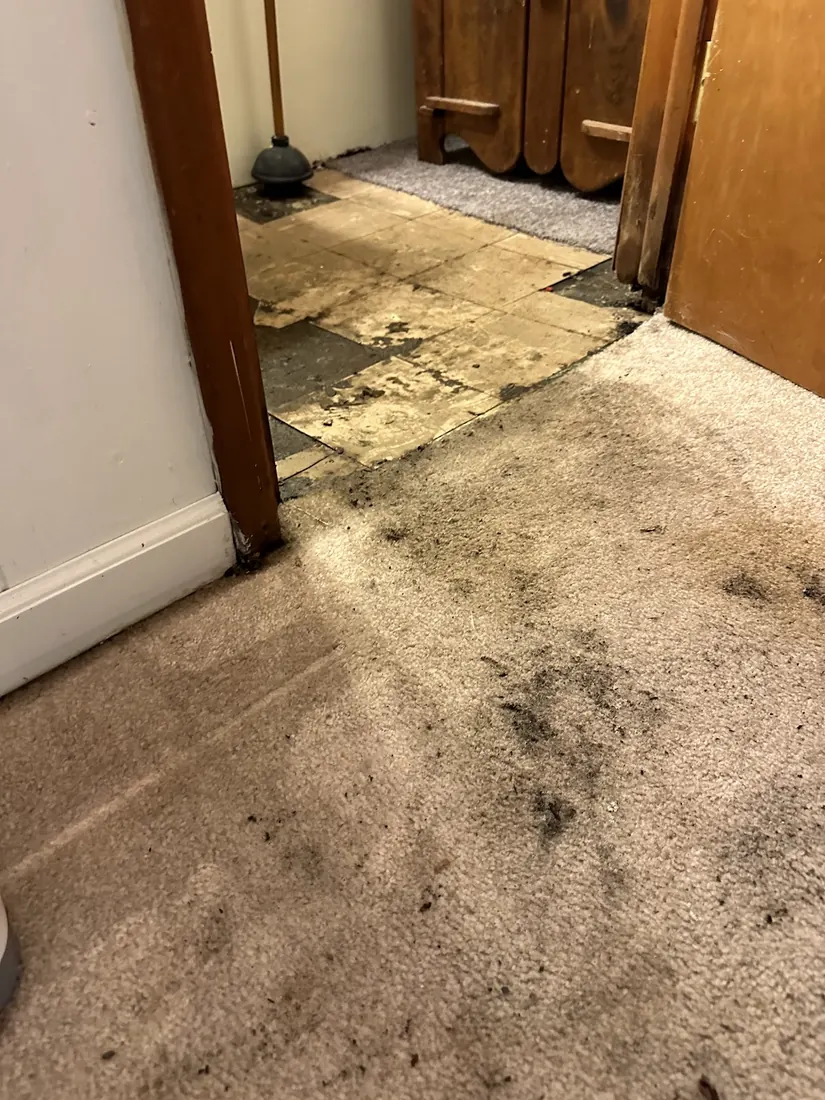
A sump pump failure is one of the most common ways a basement floods, often during the exact storm the pump was meant to handle. The cleanup itself follows the standard extraction-and-drying sequence, but a few things about sump failures are distinct: the power-outage connection, the hidden water under flooring it tends to leave, and how insurance treats it differently from other causes.
Why sump pumps fail when you need them most
Sump pumps fail for predictable reasons, and they cluster around heavy weather. A power outage during a storm stops the pump exactly when groundwater is surging; a stuck float switch, a clogged pit, an overwhelmed pump, or simple age can all do the same. The result is groundwater that the pump was holding back rising into the basement.
This is why a 'basement flooded after a power outage' and 'basement flooded after heavy rain' often describe the same sump-failure event from different angles.
How the cleanup works
Once the water is in, the cleanup is the familiar sequence: extract the standing water, find where it traveled, dry the structure and verify. Sump-failure water is groundwater, so it is generally treated as contaminated (Category 2 or 3) depending on what it contacted.
The hand-offs are to water removal, moisture detection and structural drying. Because sump water often spreads under flooring before anyone notices, this cause is strongly associated with hidden moisture.
The hidden-water problem with sump failures
Sump overflows tend to migrate. A few inches in the pit area can spread under carpet, under vinyl plank, and beneath walls, so the visible water understates the real footprint. A homeowner who squeegees up the obvious water can be left with a saturated subfloor they can't see.
This is the scenario behind many 'is water trapped under my floor?' questions, covered in water under basement flooring and handled by flooring and subfloor restoration.
Insurance and sump failures
Sump-pump failure and overflow are generally not covered by a standard homeowners policy unless a specific sump-overflow or water-backup endorsement has been added. Coverage can also get complicated when a sump fails but water appears to enter through a wall, which raises a groundwater-versus-backup question. The insurance coverage guide covers these distinctions; your insurer determines any specific loss.
Why sump pumps fail when you need them
Sump failures cluster around heavy weather, which is exactly when groundwater surges.
| Cause | What happens |
|---|---|
| Power outage in a storm | A standard pump stops while groundwater is rising |
| Stuck float switch | The pump does not turn on |
| Clogged pit or intake | The pump cannot move water |
| Overwhelmed or undersized pump | Water comes in faster than it is removed |
| Age or mechanical failure | The pump quits without warning |
A flooded basement doesn't wait. For emergency water extraction, drying or cleanup help, call (877) 927-8127, a 24/7 line, anywhere in the United States.