
Basement Carpet & Padding Restoration
Assessing and treating flooded carpet and padding, extraction, pad removal, subfloor drying and salvage decisions.
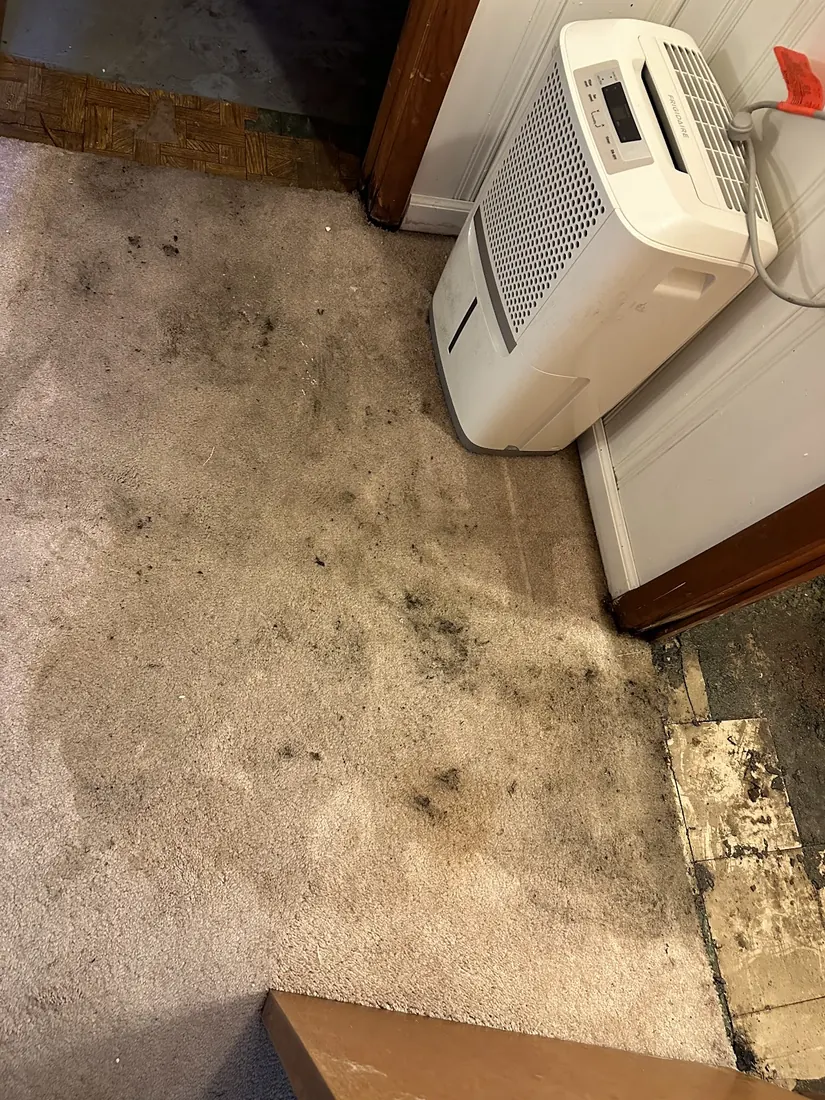
Carpet and padding restoration after a basement flood is the assessment of whether the carpet and the pad beneath it can be saved, and the work to extract, clean and dry what can. The pad and the carpet are treated as two different materials, because they almost never survive the same way.
Carpet & Padding Restoration at a glance
- Assess water category and exposure
- Extract water from carpet
- Remove padding
- Dry and check the subfloor
- Clean and relay salvageable carpet
Carpet and pad are judged separately
The padding under a carpet is absorbent and sits against the floor, so it holds water and contamination far longer than the carpet face. As a result, flooded pad is very often removed even when the carpet above it may be salvageable.
Whether the carpet itself can be saved depends on the water category, how long it stayed wet, and its construction. Clean water caught quickly gives the best chance; gray or black water, or days of saturation, usually means replacement.
- Category 1 (clean) water, addressed quickly: carpet often salvageable, pad frequently replaced.
- Category 2 (gray) water: salvage is case-by-case and leans toward removal.
- Category 3 (black/sewage) water: carpet and pad are generally removed.
What restoration actually involves
Where carpet can be saved, the work is more than drying the surface. Water is extracted from the carpet (often with a weighted extractor), the pad is typically removed, the subfloor underneath is dried and checked, and the carpet is cleaned and sanitized before being re-laid.
Because water hides under carpet, this service leans on moisture detection to confirm the subfloor is dry, and on structural drying to get it there. If the subfloor itself is damaged, the work extends into flooring and subfloor restoration.
Carpet and padding by water category
The carpet face and the padding beneath it are judged separately, and the water category drives both.
| Water category | Carpet | Padding |
|---|---|---|
| Category 1 (clean), caught fast | Often salvageable after extraction and cleaning | Usually replaced |
| Category 2 (gray) | Case by case, leans toward removal | Removed |
| Category 3 (black / sewage) | Removed | Removed |
Dealing with this now? Reach a flood cleanup specialist on the 24/7 line at (877) 927-8127, anywhere in the United States.
Safety and technical points on this page follow guidance from the EPA, CDC and the IICRC S500 water damage restoration standard. See editorial and sources.
Related cleanup services
Carpet & Padding Restoration: frequently asked questions
Can carpet be saved after a basement flood?
Sometimes. Carpet soaked by clean water and addressed within a day or two is often salvageable after extraction, cleaning and drying. Carpet exposed to gray or black water, or left wet for days, is usually removed.
Why does the padding get thrown out when the carpet doesn't?
The pad is more absorbent and sits directly on the floor, so it holds water and contamination much longer than the carpet face. It is frequently replaced even when the carpet above it can be cleaned and reused.
Is the floor under the carpet dry once the carpet is dry?
Not necessarily. Water sits between the pad and the subfloor, so the subfloor is checked with moisture meters and dried separately. A dry carpet over a wet subfloor leads to odor and mold.
Can wet basement carpet be saved?
Carpet soaked by clean water and addressed within a day or two can often be extracted, cleaned and dried. Carpet exposed to gray or black water, or left wet for days, is usually removed. The padding underneath is frequently replaced in either case.
How long does it take to dry carpet after a flood?
After the water is extracted and the pad is handled, drying the carpet and the subfloor beneath it usually takes a few days of monitored drying, confirmed with moisture readings rather than by how the surface feels.
Need carpet & padding restoration help? Reach a specialist on the 24/7 line.
24/7 emergency line · water extraction, drying, sanitization and reconstruction help nationwide